

In ventilation and air management in industrial plants, warehouses, and large commercial spaces, the choice of equipment directly impacts air quality, employee comfort, and production efficiency.
Industrial extraction fans and industrial ceiling fans are two of the most common types of ventilation equipment, but many people often cannot distinguish their functional differences and applicable scenarios when making actual selections.
This article will systematically analyze the core differences between industrial exhaust fans and industrial ceiling fans from multiple perspectives, including working principles and airflow patterns, to help readers develop a clear and professional understanding.
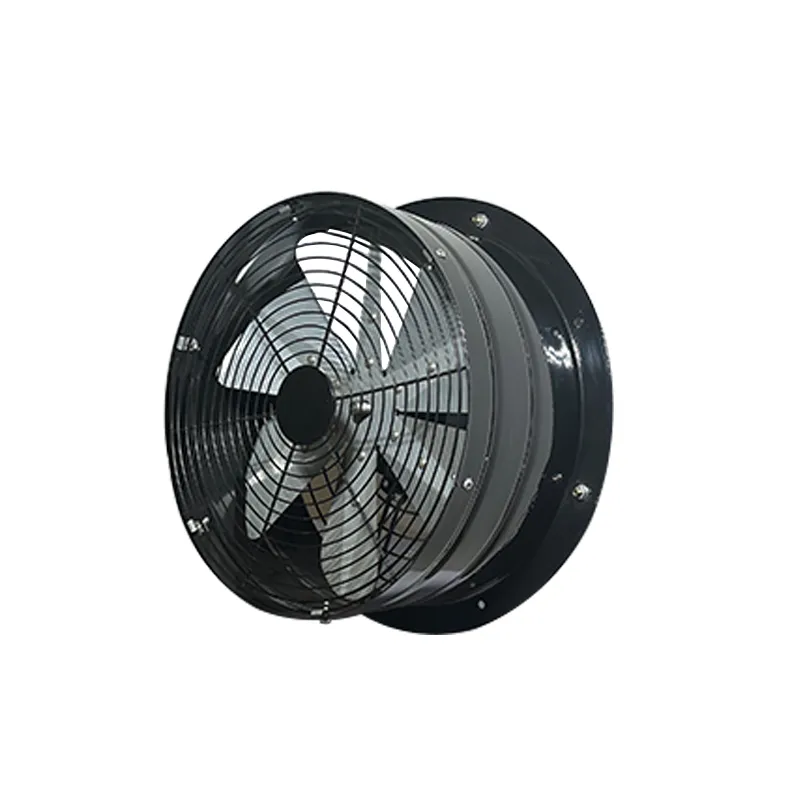
What is an industrial exhaust fan?
An industrial exhaust fan is a device specifically designed for air exhaust and ventilation. Its core function is to forcibly exhaust indoor air, thereby introducing fresh air and achieving air circulation and renewal. Industrial exhaust fans are typically installed on walls or ceilings, creating a negative pressure environment within the space through high-speed operation.
The operating principle of industrial exhaust fans can be summarized as follows:
• Operates under high pressure
• Quickly extracts indoor air
• Introduces outside air through negative pressure.
This "extraction" airflow method gives industrial extraction fans a significant advantage in improving air quality.
What is an industrial ceiling fan?
An industrial ceiling fan is a device whose core function is air circulation. It is typically installed on the ceiling and uses large-diameter blades to slowly rotate and propel airflow. Unlike industrial exhaust fans, industrial ceiling fans do not directly exhaust air; instead, they achieve uniform distribution by agitating the air.
Characteristics of industrial ceiling fans include:
• Low-pressure operation
• High airflow, low speed
• Primary function is to promote air circulation.
It focuses more on improving air distribution than on air replacement.
What is the core difference between industrial exhaust fans and industrial ceiling fans?
This is a question many users are most concerned about. In short, the core difference between the two lies in their "air handling methods":
1. Different Airflow Directions
Industrial Exhaust Fans:
• Expel air from the room
• Create unidirectional airflow
• Rely on negative pressure to introduce fresh air
Industrial Ceiling Fans:
• Circulate air within the room
• Do not change the total air volume
• Simply redistribute the air
2. Different Operating Pressures
Industrial exhaust fans operate under higher pressure to quickly expel air; while industrial ceiling fans operate under lower pressure, emphasizing a smooth airflow.
3. Different Functional Positions
The core function of industrial extraction fans is "ventilation," while the core function of industrial ceiling fans is "circulation."
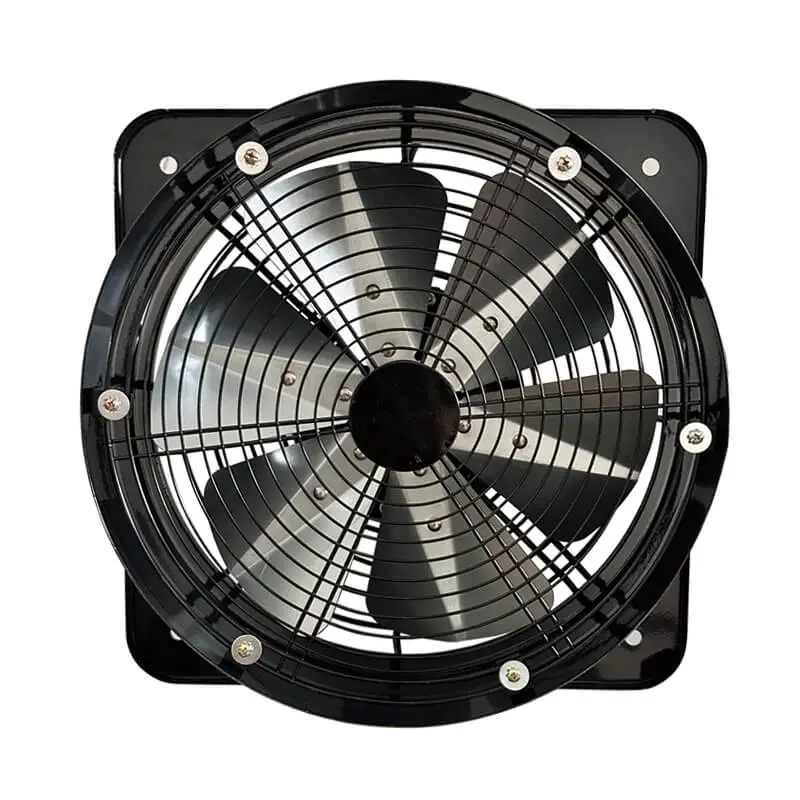
Why can industrial exhaust fans create negative pressure?
Industrial extraction fans create negative pressure in a space because they continuously expel air during operation, causing the indoor air pressure to be lower than the outside air pressure. At this time, outside air naturally enters the room through doors, windows, air inlets, etc., thus creating continuous airflow.
The advantages of this mechanism include:
• Rapidly expelling hot air
• Effectively reducing indoor temperature
• Removing dust, smoke, and odors
• Improving air freshness
Therefore, industrial exhaust fans play an irreplaceable role in high-temperature, high-pollution environments.
Why are industrial ceiling fans more suitable for large spaces?
The design focus of industrial ceiling fans is on "coverage" and "air uniformity." Their large-diameter blades can push a large amount of air at low speeds, thus creating a stable airflow circulation in a large space.
Their advantages are mainly reflected in:
• Wide coverage
• Gentle airflow
• Relatively low energy consumption
• Improving air stratification
For example, in high-rise factories, hot air tends to accumulate at the top, and industrial ceiling fans can bring this hot air back to the work area, achieving temperature uniformity.
What scenarios are industrial exhaust fans suitable for?
Industrial exhaust fans are widely used in environments requiring forced ventilation, especially in places with severe air pollution or high temperatures.
Common applications include:
• Factory workshops
• Livestock farms
• Kitchens and food processing areas
• Warehouses and logistics centers
• Chemical and manufacturing environments
In these scenarios, industrial extraction fans effectively control air quality by continuously exhausting air.
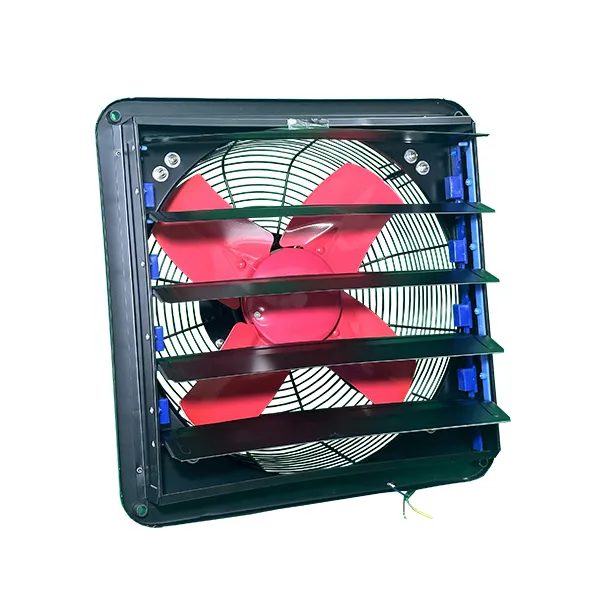
What are the suitable scenarios for industrial ceiling fans?
Industrial ceiling fans are more suitable for spaces with poor air circulation but low pollution levels, primarily for improving comfort.
Typical application scenarios include:
• Large warehouse spaces
• Gymnasiums
• Commercial retail spaces
• Exhibition centers
• Production workshops (auxiliary ventilation)
It's important to note that industrial ceiling fans are typically not used alone, but rather as auxiliary equipment, used in conjunction with industrial exhaust fans or other ventilation systems.
Can industrial exhaust fans and industrial ceiling fans be used simultaneously?
The answer is yes, and in many cases, this combination is recommended.
When industrial extraction fans and industrial ceiling fans operate simultaneously, the following effects can be achieved:
• The industrial extraction fan is responsible for expelling air.
• The industrial ceiling fan is responsible for promoting even airflow.
• Improved overall ventilation efficiency.
This combination not only improves air quality but also enhances human comfort.
What should be considered when choosing an industrial exhaust fan?
When purchasing an industrial exhaust fan, several technical parameters need to be considered:
1. Airflow
Airflow is a crucial indicator of an industrial exhaust fan's performance and should be matched to the room's volume.
2. Installation Location
Wall-mounted or ceiling-mounted installations will affect exhaust efficiency and should be selected based on the actual structural requirements.
3. Power and Energy Consumption
While meeting ventilation needs, choose an industrial extraction fan with high energy efficiency.
4. Material and Durability
Industrial environments are complex, and industrial extraction fans need to be corrosion-resistant and dustproof.
What should be considered when choosing an industrial ceiling fan?
Key considerations for industrial ceiling fans include:
• Blade diameter
• Coverage area
• Speed control
• Installation height The core of industrial ceiling fans is "uniform airflow," therefore, selection should be based on the room dimensions.
Can industrial exhaust fans replace industrial ceiling fans?
From a functional perspective, industrial exhaust fans cannot completely replace industrial ceiling fans.
The reasons are:
• Industrial exhaust fans are primarily for air exhaust
• Industrial ceiling fans are primarily for air distribution
If only industrial exhaust fans are used, although the air can be refreshed, the airflow in the room may be uneven, resulting in localized areas remaining stuffy. Therefore, in large spaces, a combination of industrial exhaust fans and industrial ceiling fans is more reasonable.
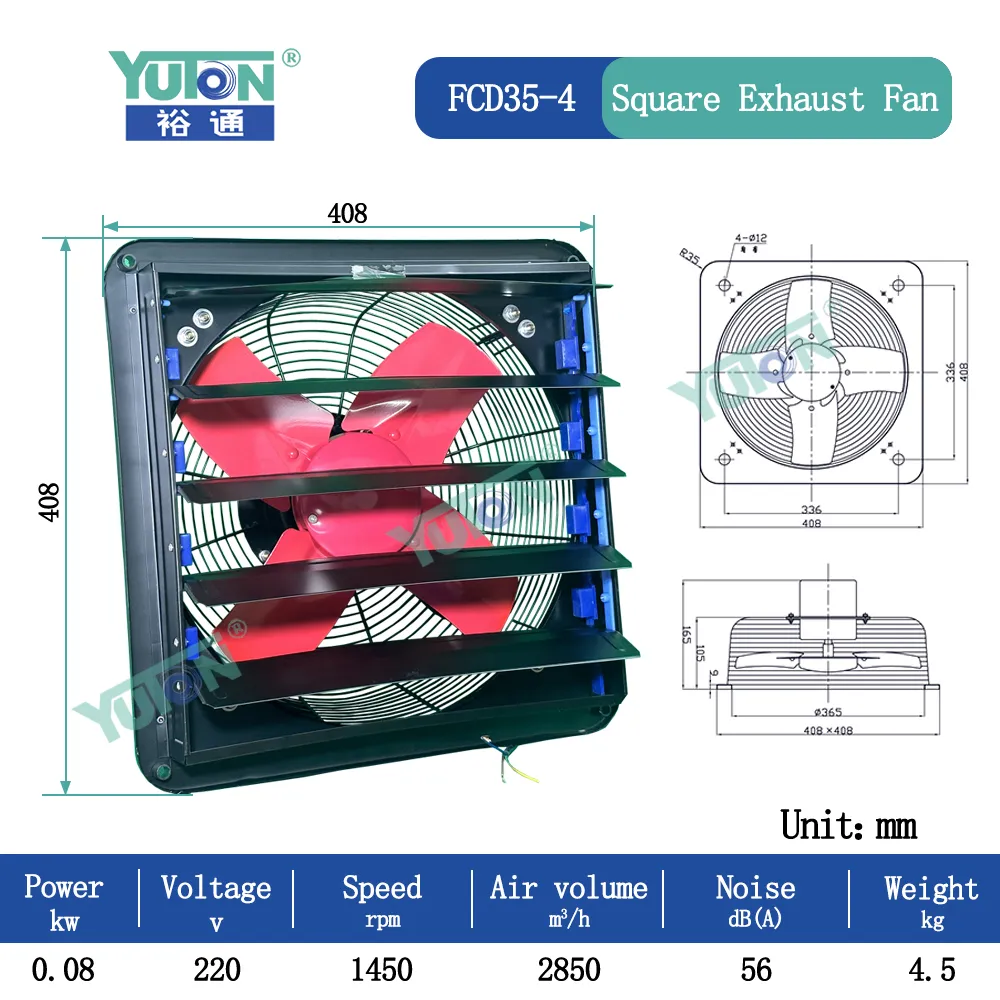
Can industrial ceiling fans replace industrial extraction fans?
Similarly, industrial ceiling fans cannot replace industrial extraction fans.
Because:
• Industrial ceiling fans do not exhaust air
• They cannot remove pollutants
• They cannot improve air quality
If there is dust, exhaust fumes, or high temperatures in the environment, industrial ceiling fans alone cannot solve the problem; industrial exhaust fans must be used for air replacement.
Essentially, "industrial exhaust fans" and "industrial ceiling fans" represent two completely different air handling logics:
• Industrial exhaust fans: expel air using the principle of negative pressure to achieve ventilation.
• Industrial ceiling fans: circulate air at low pressure to achieve uniform distribution.
Industrial exhaust fans play a core role in improving air quality, reducing temperature, and removing pollution, while industrial ceiling fans excel in enhancing spatial comfort and airflow.