

——Which is better, industrial axial flow fans or industrial centrifugal fans?
In industrial ventilation and air delivery systems, industrial axial flow fans and industrial centrifugal fans are two of the most core and common types of equipment. Whether in factory workshops, warehousing and logistics centers, or environmental exhaust systems, these two types of fans are almost ubiquitous.
However, many users face a crucial question when selecting a fan: which is better, an industrial axial flow fan or an industrial centrifugal fan?
In reality, this is not a simple question of "which is better," but a professional issue that requires a comprehensive judgment based on working principles, performance characteristics, and application requirements.
This article will provide a systematic analysis of these two products, industrial axial flow fans and industrial centrifugal fans, from multiple dimensions to help you make a more informed choice.
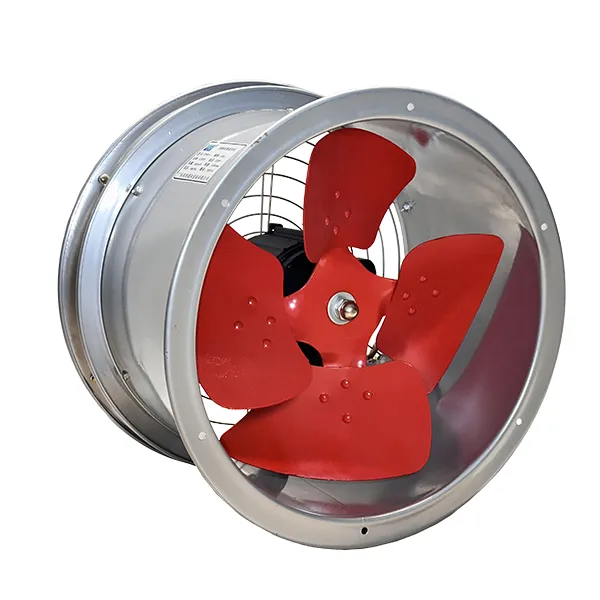
What is an industrial axial flow fan?
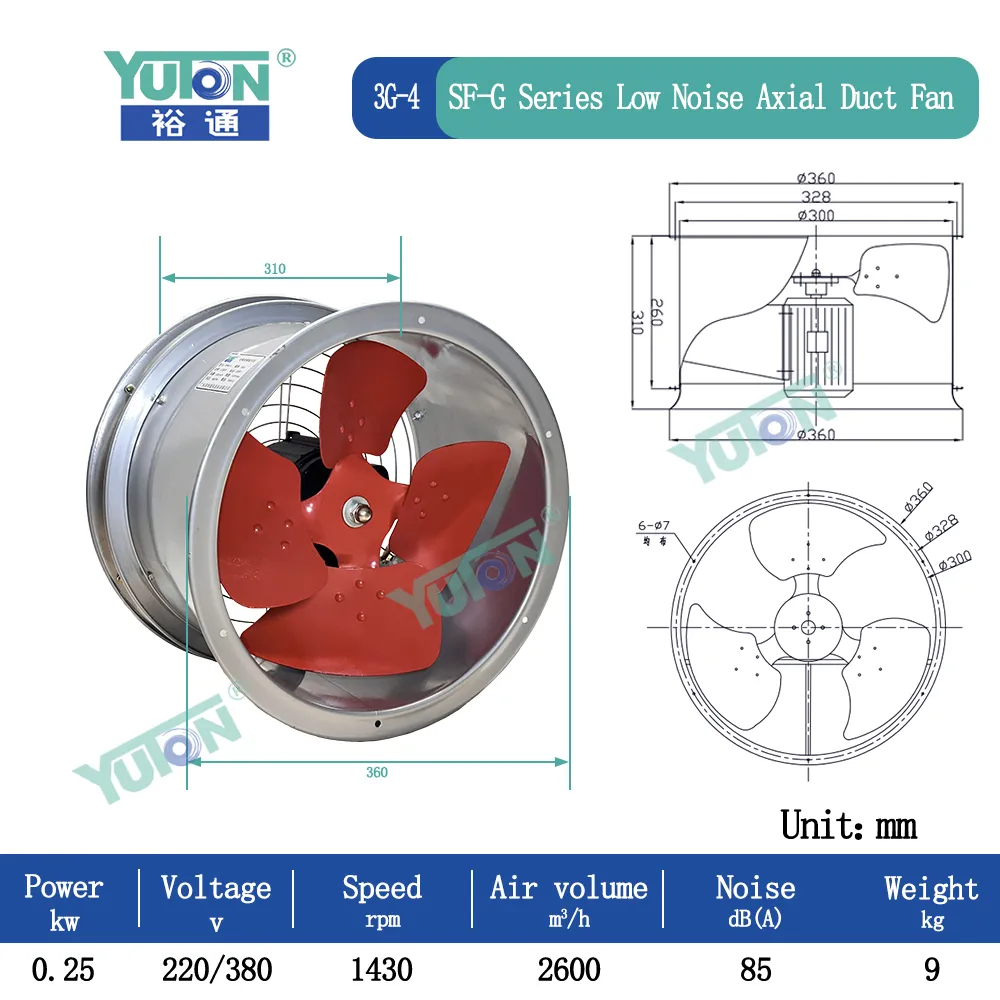
An industrial axial flow fan is a device that uses the rotation of an impeller to make airflow follow the axis of the fan. In other words, the direction of air intake and exhaust is essentially the same.
Its main characteristics include:
• Airflow direction parallel to the axis
• Large air volume, low resistance
• Relatively simple structure
• Suitable for long-distance air transport
The working principle of an industrial axial flow fan is similar to that of a propeller, propelling air forward to achieve large-scale air transport.
What is an industrial centrifugal fan?
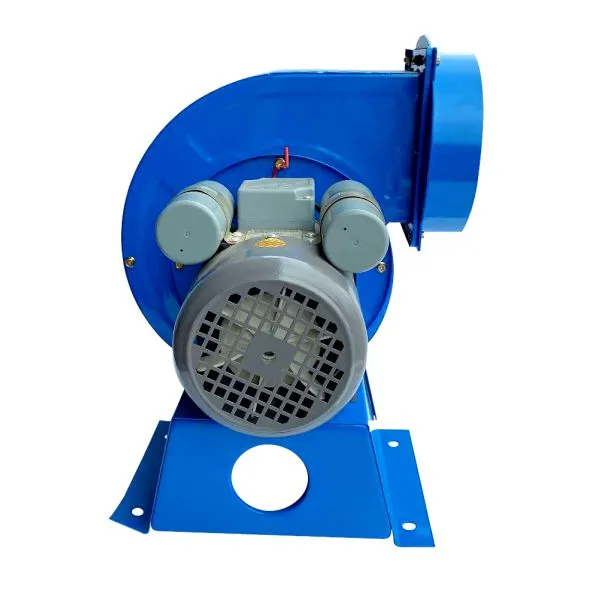
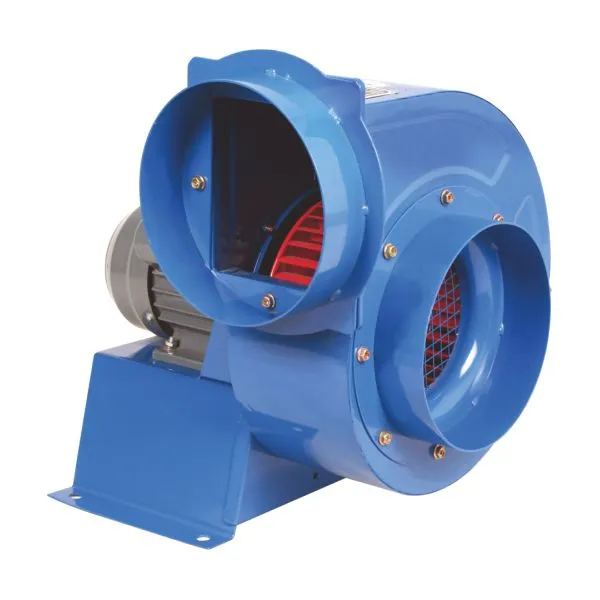
Industrial centrifugal fans operate in a completely different way. After air enters the fan, it is thrown outward (centrifugally) by the high-speed rotation of the impeller and then discharged through the volute structure.
Its core characteristics include:
• Change in airflow direction (usually 90°)
• High pressure, strong power
• Suitable for high-resistance systems
• Stable transport capacity
Industrial centrifugal fans are more like "pressurization equipment," capable of propelling air forward in complex piping systems.
Industrial axial flow fans and industrial centrifugal fans: What are the core differences?
To determine which is better, an industrial axial flow fan or an industrial centrifugal fan, it is essential to understand their fundamental differences.
1. Different Airflow Directions
• Industrial Axial Flow Fans: Air flows in a straight line along the axis.
• Industrial Centrifugal Fans: Air is discharged after its direction is changed.
2. Different Pressure and Airflow Characteristics
• Industrial Axial Flow Fans: High airflow, low pressure
• Industrial Centrifugal Fans: Medium airflow, high pressure
3. Different Energy Utilization Methods
Industrial axial flow fans focus more on "pushing air," while industrial centrifugal fans focus more on "compressing air."
When are industrial axial flow fans better?
This is one of the key questions many users are concerned about.
1. Is long-distance air delivery required?
If your application requires delivering large volumes of air over long distances, then industrial axial flow fans are usually a better choice.
The reasons are:
• Industrial axial flow fans are more efficient in low-resistance environments.
• They can deliver large volumes of air with lower energy consumption.
• The airflow path is straight, resulting in less loss.
For example, industrial axial flow fans perform particularly well in scenarios such as tunnel ventilation and large factory air exchange.
2. Is high-volume ventilation required?
When the requirement is "rapid air exchange and large-scale ventilation," industrial axial fans are more advantageous.
Their characteristics include:
• High air volume delivered per unit time
• Suitable for open or semi-open spaces
• Flexible installation
Therefore, in scenarios emphasizing airflow, industrial axial fans are often superior to industrial centrifugal fans.
In which situations are industrial centrifugal fans better?
While industrial axial fans excel in airflow, industrial centrifugal fans are more advantageous in other key scenarios.
1. Is there a high-resistance system?
If the ventilation system contains the following:
• Long ducts
• Multiple bends
• Filter devices
• Dust collection equipment
Then industrial centrifugal fans are more suitable.
Because:
• Industrial centrifugal fans can provide higher air pressure
• Overcome system resistance
• Ensure stable airflow delivery
2. Is high-pressure air delivery required?
The biggest advantage of industrial centrifugal fans lies in their "pressure capacity."
Its characteristics include:
• High output air pressure
• Ability to propel air through complex systems
• Faster delivery speed
This makes industrial centrifugal fans irreplaceable in industrial production systems.
Which is more energy-efficient, industrial axial fans or industrial centrifugal fans?
Energy efficiency cannot be simply attributed to one type of fan being superior; it depends on the application scenario.
In low-resistance environments:
Industrial axial fans are generally more energy-efficient because:
• Lower energy loss
• Direct airflow path
• Simpler structure
In high-resistance environments:
Industrial centrifugal fans are actually more energy-efficient because:
• The efficiency of industrial axial fans drops sharply in high-resistance environments
• Industrial centrifugal fans can operate stably
Therefore, incorrect selection can actually lead to increased energy consumption.
Can industrial axial fans replace industrial centrifugal fans?
In some simple ventilation scenarios, industrial axial fans can replace industrial centrifugal fans, but this replacement is conditional.
Suitable alternatives include:
• Low system resistance
• No high pressure required
• Simple ventilation path
However, industrial axial fans are not recommended as replacements for industrial centrifugal fans in the following situations:
• Complex ductwork
• In presence of a filtration system
• Requirement for stable pressure
Can industrial centrifugal fans replace industrial axial fans?
From a technical perspective, industrial centrifugal fans can perform some of the functions of industrial axial fans, but this does not mean they are a better choice.
Reasons include:
• Generally higher cost
• Potentially higher energy consumption
• Higher installation complexity
If it's only for large-space ventilation, using industrial centrifugal fans will result in wasted resources.
How to determine which is better in actual selection?
To determine whether an industrial axial fan or a centrifugal fan is better, consider the following key factors:
1. Airflow Requirements
• High airflow → Choose an industrial axial fan
• Medium airflow → Consider both
2. Air Pressure Requirements
• Low pressure → Industrial axial fan
• High pressure → Industrial centrifugal fan
3. System Structure
• Simple structure → Industrial axial fan
• Complex ductwork → Industrial centrifugal fan
4. Operating Environment
• Open space → Industrial axial fan
• Enclosed system → Industrial centrifugal fan
Can industrial axial fans and industrial centrifugal fans be used in combination?
The answer is yes, and this combination is very common in many industrial systems.
The typical combination is:
• Industrial axial fan handles large-area ventilation
• Industrial centrifugal fan handles localized high-pressure delivery. This approach balances airflow and air pressure, improving overall system efficiency.
Why is the question of "which is better" a misconception?
From a professional perspective, the question of "which is better, an industrial axial fan or an industrial centrifugal fan?" is inherently flawed.
The reasons are:
• They have different design goals
• They operate on different principles
• They are suitable for different applications.
Industrial axial fans excel at "delivering large volumes of air," while industrial centrifugal fans excel at "overcoming resistance to deliver air."
Therefore, the real question should be:
Which one is more suitable for your application scenario?
A comprehensive analysis of industrial axial fans and industrial centrifugal fans reveals:
• Industrial axial fans are more suitable for high-volume, low-resistance, long-distance air delivery scenarios.
• Industrial centrifugal fans are more suitable for high-pressure, complex systems, and stable delivery scenarios.
If your requirement is rapid ventilation and air replacement, then an industrial axial fan is generally a better choice; however, if your system needs to overcome resistance and ensure stable airflow, then an industrial centrifugal fan has the advantage.